
How to Prepare for a Power Outage in Toronto: A Simple Plan for Your Home
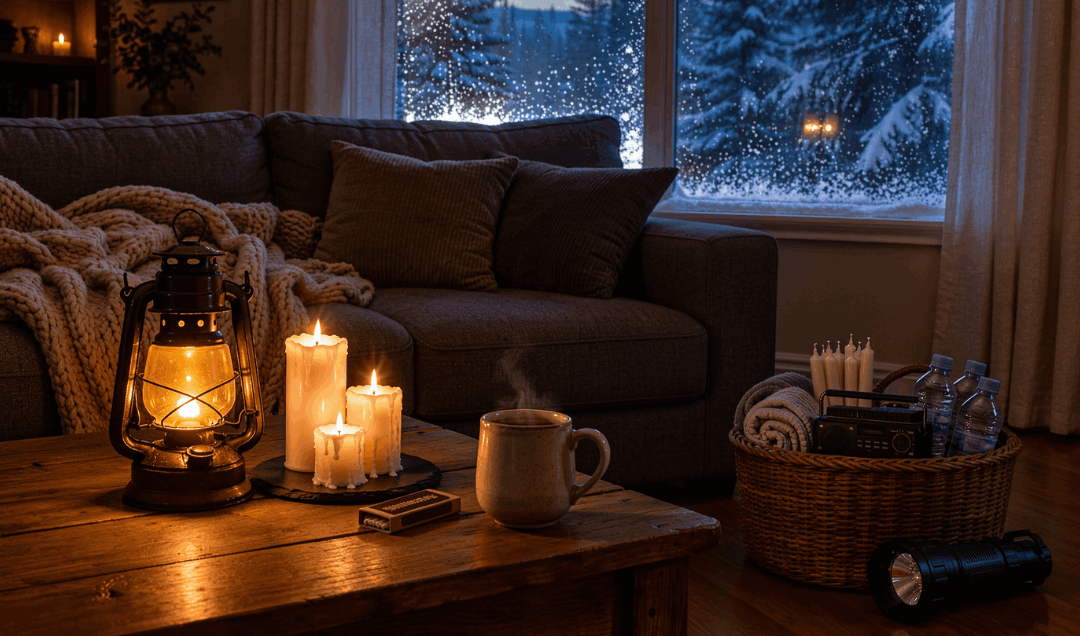
If the power went out tonight, would you know where your flashlight is?
Most of us don't. Not until we're standing in a dark kitchen, tapping a phone that's down to 12 per cent.
Power outages are not something to panic about. But they do happen here, and a little preparation turns a stressful night into a calm one. Here's how to prepare for a power outage in Toronto with a simple kit, a simple plan and a few safety rules that matter most.
Do power outages really happen in Toronto?
Yes. Toronto's grid is reliable day to day, but storms are a different story. Strong wind, heavy rain, hail and ice bring down trees and branches, and those take power lines with them.
Toronto Hydro says most outages come down to a handful of causes: weather, wildlife, trees touching lines and equipment failure. Neighbourhoods with large mature trees and overhead wires can feel it more during a big storm.
What does the data say?
On September 2, 2026, a severe wind and hail storm hit the city. At its peak, Toronto Hydro reported about 65,000 customers without power. The next day, roughly 6,000 customers were still in the dark, and Toronto Hydro said it could take time to reach everyone.
That was a late-summer storm. Winter adds ice and freezing rain to the list, and an outage in January means no heat on top of no lights.
One honest note: most outages are short, and many homes never lose power in a given year. The point is not to expect the worst. It's to be ready for a few hours, or a few days, without scrambling.
The Government of Canada recommends that every household be ready to take care of itself for at least 72 hours in an emergency. That's a good target for your kit.
Step 1: Build a simple outage kit
You don't need anything fancy. Keep these together in one bin or bag:
- Water: about 4 litres per person, per day (2 for drinking, 2 for cooking and washing), for at least three days
- Non-perishable food that doesn't need cooking, plus a manual can opener
- Flashlights and extra batteries (safer than candles)
- A first aid kit and any medications your household takes
- A battery-powered or wind-up radio
- Warm blankets and extra layers
- Some cash in small bills, in case card machines are down
- Pet food and supplies, if you have pets
Check the kit once or twice a year. Changing the clocks is an easy reminder to swap out water, batteries and expired food.
Step 2: Charge up before a storm
When Environment Canada issues a warning, take ten minutes to charge everything: phones, power banks, laptops and any rechargeable lights.
A fully charged power bank can keep a phone going for a day or more. A battery radio keeps you updated if the cell network gets busy.
It also helps to bookmark the Toronto Hydro outage map and save their number, 416-542-8000, in your phone. You can report an outage there and check estimated restoration times.
Step 3: Make a plan for your household
A kit only helps if everyone knows where it is. Talk it through once:
- Where does the kit live? Somewhere easy to reach in the dark.
- Which room will everyone gather in? Pick one room that holds heat well, with fewer windows, and close the doors to rooms you aren't using.
- Who checks on whom? Think about older relatives or neighbours who live alone.
- Where can you go if it lasts? During long winter outages, the City of Toronto can open warming centres. Call 311 for current locations.
When the power comes back, it can come back with a surge. Unplug sensitive electronics during the outage and plug them back in once power is steady.
Step 4: Keep the fridge and freezer closed
This is the easiest tip to follow and the easiest to forget. Every time you open the door, cold air escapes.
According to Health Canada:
- An unopened fridge keeps food cold for about 4 hours
- A full freezer keeps food frozen for about 48 hours
- A half-full freezer keeps food frozen for about 24 hours
A fridge thermometer helps you check without guessing. The fridge should stay at or below 4°C. If perishable food has been above that for too long, or you're not sure, throw it out. It's not worth the risk.
Step 5: Stay safe with heat and light
This is the most important part of the plan.
- Run generators outdoors only, away from windows, doors and vents. Never in a garage, basement or porch.
- Never use a BBQ, camping stove or propane heater indoors. They produce carbon monoxide (CO), a gas you can't see or smell.
- Use flashlights instead of candles where you can. If you do use candles, keep them in sturdy holders and never leave them unattended.
- Stay at least 10 metres away from any downed power line, about the length of a school bus, and report it to Toronto Hydro or 911.
A working CO alarm is your backup. Ontario's Fire Code changed on January 1, 2026, and now requires CO alarms on every storey of a home and outside sleeping areas if the home has a fuel-burning appliance, a fireplace or an attached garage. If you haven't checked yours this year, now is a good time.
For current homeowners
A few things are worth checking before the next storm:
- Sump pump: if your basement has one, it stops when the power does. Ask a plumber whether a battery backup makes sense for your home, especially if your basement has flooded before.
- Trees near your lines: don't trim near power lines yourself. Contact Toronto Hydro about trees touching their wires.
- Condo owners: elevators and some building systems may stop during an outage. Ask your property manager what the building's backup plan covers.
For buyers
When you're touring homes, a few questions can tell you a lot:
- Is there a sump pump, and does it have a battery backup?
- Are CO and smoke alarms installed where they need to be?
- How old is the heating system, and what fuel does it use?
- Are there large trees hanging over the house or the lines?
None of these are deal-breakers on their own. They just help you understand the home you're buying, and what to budget for after you move in. A home inspector can give you more detail.
A quick checklist
- Pack the kit
- Charge your devices
- Pick one warm room
- Keep the fridge shut
- Generators outside, BBQs outside
My take
I talk with homeowners across Toronto and surrounding areas every week, and preparation always comes up as one of those things people mean to do "someday." It doesn't need to be a big project. One bin, one charged power bank and one conversation with your household will cover most of what you need. The goal isn't to worry. It's to know that if the lights go out, your home and your family will be fine until they come back on.
If you have questions about your home, or you're thinking about your next move, I'm here for you.
Khoa Le, Real Estate Broker | Real Broker Ontario
Phone: 647-271-5461
Email: khoa@realimpactgroup.com
Instagram: @realimpactgroup | @realbrokerage
This post is for general information only and is not professional safety, legal or financial advice. For emergencies, call 911. For outage updates, check Toronto Hydro, and for City services, call 311.
Categories
Recent Posts








Send us your Questions or Comments.


ABOUT US
Real Impact Group specializes in helping clients achieve their heart's desire through Real Estate. While making a lasting IMPACT on our clients' lives, we also treat each one as a valued member of our family.
130 KING ST W UNIT 1800B TORONTO,
Ontario M5X1E3, Canada
+1(647) 271-5461
RESOURCES
VISIT US ON YOUTUBE
Are you thinking about moving to Toronto and surrounding areas? This channel is all about living in Toronto Canada, moving to Toronto Canada, and relocating to Toronto Canada. If you want to know everything about eating, sleeping, working, playing, and the good and bad of living in Toronto and surrounding areas, then subscribe & tap the for notifications 🔔 so you can be the first to know about the current market in Toronto.
